Source Quartz Point for decoration, casting, and lighting
Compare 30 Quartz Point listings from verified suppliers offering natural stone and crystal varieties. Buyers can evaluate options for decoration, casting, and electric lighting applications with customizable sizes and shapes.
Key considerations
Products List




Strong Quartz Focused on Quartz Slabs and Quartz Countertops More Than 10 Years.
$65.00 - $75.00
MOQ: 150 Square Meters





Comprehensive Sourcing Guide
Strategic Sourcing Guide for Quartz Point Procurement
Understanding Product Variants and Technical Specifications
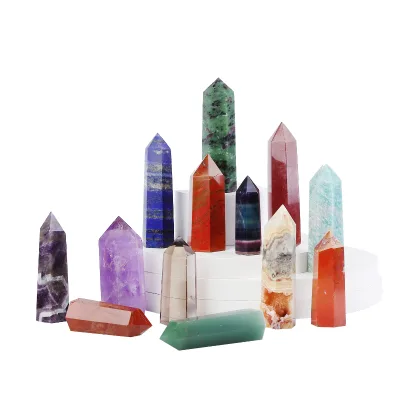
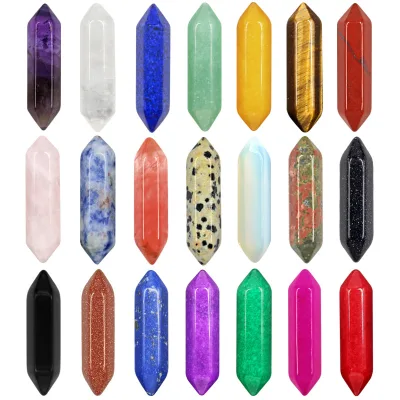
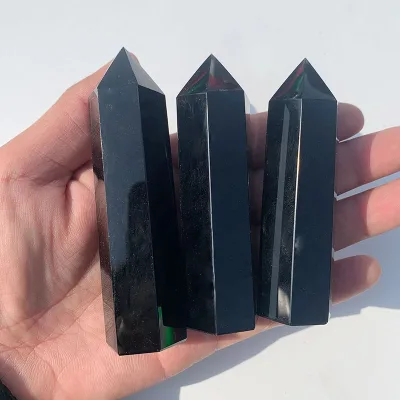
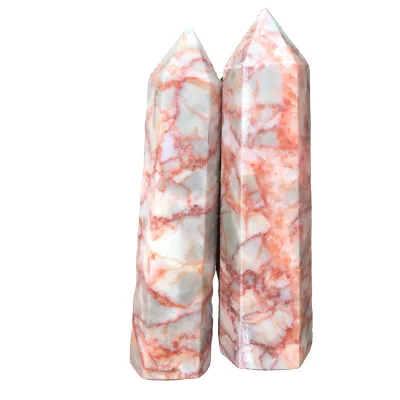
The term "Quartz Point" in the B2B marketplace often encompasses a diverse range of product categories, from decorative natural stone specimens to high-performance industrial components. A critical first step in sourcing is distinguishing between these distinct applications, as the technical requirements for a decorative crystal differ vastly from those of a semiconductor-grade quartz rod. Based on available market data, the product landscape includes natural stone varieties labeled as "crystal point natural" with shapes described as "point" or "block & cube," intended primarily for decoration. These items are typically polished, with sizes ranging approximately from 4 to 9 cm, and are available in a wide spectrum of colors including labradorite, crazy agate, yellow fluorite, blue sandstone, pink jade, sodalite, red strawberry, green aventurine, fantasy amethyst, yellow jade, white howlite, rose quartz, black obsidian, lapis lazuli, ruby zoisite, yellow tiger eye stone, smoky quartz, and pr.
Conversely, the industrial segment features quartz products designed for high-temperature and high-purity environments. These items, often categorized under "Quartz Crucible" or "Cylinder and Circular Cone," exhibit specific physical properties essential for manufacturing processes. For instance, industrial quartz rods may have a rod size of 3mm with a point diameter ranging from 3mm to 12mm. The maximum operating temperature for such high-grade materials is observed to reach up to 1450°C, a critical specification for applications in electric lighting and semiconductor manufacturing. The outer diameter (OD) for these cylindrical forms can vary significantly, typically spanning from 2.0mm to 500mm, while the inner diameter (ID) ranges from 1.5mm to 500mm. Thickness is often customizable to meet specific engineering tolerances. Buyers must verify whether the supplier's "Quartz Point" refers to a raw natural stone aggregate or a processed industrial silica component, as the sourcing strategy, quality control protocols, and cost structures for these two categories are fundamentally different.
Compliance, Certification, and Regulatory Standards
When sourcing quartz products, particularly for industrial applications, verifying compliance with international standards is non-negotiable. The market data indicates that suppliers may offer products certified under ISO and CE standards. For industrial components, additional verification against SGS standards is often observed, suggesting a need for rigorous third-party quality assurance. Buyers should explicitly request current certification documents rather than relying on general claims, as the specific scope of the ISO certification (e.g., ISO 9001 for quality management versus specific material standards) determines the supplier's capability to maintain consistent product quality.
In the context of natural stone decorations, while certification may be less stringent than for industrial goods, the "Safe Package" and "Standard Package" claims imply adherence to specific shipping and handling protocols to prevent damage. However, for industrial quartz used in semiconductor or electric lighting applications, the material purity and thermal resistance are paramount. The "High Temperature Resistance" advantage listed for certain products must be validated through test reports. Buyers should not assume that a product labeled "Superior Quality" automatically meets the rigorous purity requirements for semiconductor use without documented evidence. It is essential to confirm that the "Customize" standard option mentioned in supplier profiles aligns with the specific regulatory requirements of the buyer's target market, ensuring that the product can legally and safely be integrated into the final manufacturing process.
Cost Drivers and Pricing Structure Analysis
The pricing for quartz points is highly variable, influenced heavily by the product type, material grade, and customization level. Market observations show a broad price range, with some listings indicating costs between $0.50 and $100 per unit, while others suggest a much wider spectrum up to $500. This variance is primarily driven by the distinction between natural stone decorations and industrial-grade processed quartz. Decorative items, often sold as single units or small sets, may have lower base costs but can incur higher per-unit shipping fees due to the "Single package size" of 15x15x15 cm and a "Single gross weight" of 1.500 kg.
For industrial applications, the cost is driven by the precision of the machining, the purity of the silica, and the thermal specifications. Products with a maximum temperature rating of 1450°C and specific dimensional tolerances (e.g., OD 2.0-500mm) command a premium. The "Customized Logo" and "OEM/ODM" availability also add to the cost structure, as these services require additional setup and production time. Buyers should note that the Minimum Order Quantity (MOQ) is a significant cost driver; while some suppliers list an MOQ of 1, others specify 1 kilo, which can drastically affect the unit price for bulk procurement. The "Delivery Time" of 3-10 days suggests a relatively agile supply chain, but rush orders or custom specifications may extend this lead time, impacting the total landed cost. Understanding these variables is crucial for accurate budgeting and avoiding unexpected expenses during the procurement process.
Typical Applications and Usage Scenarios
The application of quartz points is bifurcated between aesthetic and functional uses. On the decorative side, the "Product Type: Block & Cube" and "Style: Mascot" attributes, combined with the "Application: Christmas" tag, indicate a strong market presence in holiday decorations and interior design. These natural stone points, with their polished finish and varied colors, are utilized for home decor, gift items, and artistic displays. The "Usage: Decoration" is the primary driver here, where the visual appeal of the stone's color and clarity is the most important factor.
In the industrial sector, the applications are far more technical. The "Usage: Electric Lighting, Semiconductor" designation highlights the critical role of quartz in high-temperature and high-purity environments. Quartz crucibles and rods are essential in the manufacturing of semiconductors, where the material's thermal stability and chemical inertness are required to withstand extreme processing conditions. The "Advantage: High Temperature Resistance" is a key performance indicator for these applications, ensuring that the component does not degrade or contaminate the product during the manufacturing process. Additionally, the "Application: Glass, Casting, Ceramic" suggests that quartz points may be used as raw materials or tools in the production of glass and ceramic goods. Buyers must align their procurement strategy with these specific use cases, ensuring that the selected product meets the functional demands of their industry.
Supplier Evaluation and Origin Verification
Evaluating suppliers requires a careful examination of their geographic origin and production capabilities. The data indicates that products originate from regions such as Jiangsu and Henan in China. While these regions are known for manufacturing, buyers should verify the specific factory capabilities rather than relying solely on the country of origin. The "Brand Name: CROWN" and "Brand: Mission" suggest that some suppliers operate under established brand identities, while others may offer generic or private-label options. The availability of "OEM/ODM" services indicates that suppliers are capable of customizing products to meet specific buyer requirements, which is a valuable attribute for companies seeking unique specifications.
When evaluating a supplier, buyers should look for evidence of their "Quality: Superior" claims. This involves checking for consistent production records, sample availability, and the ability to provide detailed technical datasheets. The "Packaging Details" mentioning plastic bags, foam, and cartons suggest a focus on protecting the product during transit, which is crucial for fragile items like crystal points or precision quartz rods. However, the "prod_packing" options of "Wooden Box" for certain industrial items indicate that heavy-duty packaging is available for high-value or sensitive components. Buyers should assess whether the supplier's packaging standards align with the fragility and value of the product being sourced. Additionally, the "Shipping" options including DHL, UPS, FedEx, and TNT provide flexibility in logistics, but buyers should verify the supplier's track record with these carriers to ensure reliable delivery.
Quality Control and Long-Term Procurement Considerations
Implementing a robust quality control (QC) strategy is essential for mitigating risks associated with Quartz Point procurement. For natural stone products, QC should focus on visual inspection for color consistency, polish quality, and structural integrity. Buyers should request pre-shipment samples to verify that the "Color" matches the expected spectrum and that the "Shape" adheres to the "point" or "block" specifications. For industrial quartz, QC must include rigorous testing of thermal resistance, dimensional accuracy, and material purity. The "Max Temperature: 1450c" claim must be validated through independent testing to ensure the product can withstand the intended operating conditions without failure.
Long-term procurement considerations involve building a sustainable relationship with suppliers who can consistently deliver high-quality products. The "Customization: Available" and "Customized Logo" options suggest that suppliers are willing to adapt to changing buyer needs, which is beneficial for long-term partnerships. However, buyers should establish clear communication channels and define quality acceptance criteria in their contracts. The "Delivery Time: 3-10 Days" indicates a relatively short lead time, but buyers should plan for potential delays, especially for custom orders. Regular audits and performance reviews of the supplier can help maintain high standards and ensure that the supply chain remains resilient. By focusing on these quality control measures and long-term strategies, buyers can secure a reliable source of quartz points that meets their specific technical and operational requirements.
FAQs
What is the minimum order quantity for quartz points?
The minimum order quantity is 1 kilo for some listings, while others allow orders starting from 1 unit. Buyers should verify the specific MOQ per supplier before placing an order to ensure it meets their volume requirements.
Can I get a customized logo on quartz points?
Yes, customized logos are available for both decorative and industrial quartz points. Suppliers offer OEM and ODM services to accommodate specific branding needs, allowing for personalized product designs.
Which certifications do Quartz Point manufacturers hold?
Manufacturers often hold ISO and CE certifications, with some industrial suppliers also providing SGS certification. Buyers should request current certification documents to verify compliance with international standards for their specific application.
How long is the delivery time for quartz points?
The standard delivery time ranges from 3 to 10 days for most orders. This lead time may vary depending on customization requirements, order volume, and the specific shipping method selected by the buyer.
What is the maximum temperature resistance for industrial quartz points?
Industrial quartz points can withstand maximum temperatures up to 1450 degrees Celsius. This high-temperature resistance makes them suitable for applications in electric lighting and semiconductor manufacturing processes.
Where are quartz points typically manufactured?
Products originate from regions such as Jiangsu and Henan in China. Buyers should verify the specific factory location to ensure it aligns with their logistics preferences and supply chain requirements.
What packaging options are available for quartz points?
Packaging includes safe packages with plastic bags, foam, and cartons for standard items. Industrial products may also be shipped in wooden boxes to ensure protection during transit.